

Skin cancer medicine
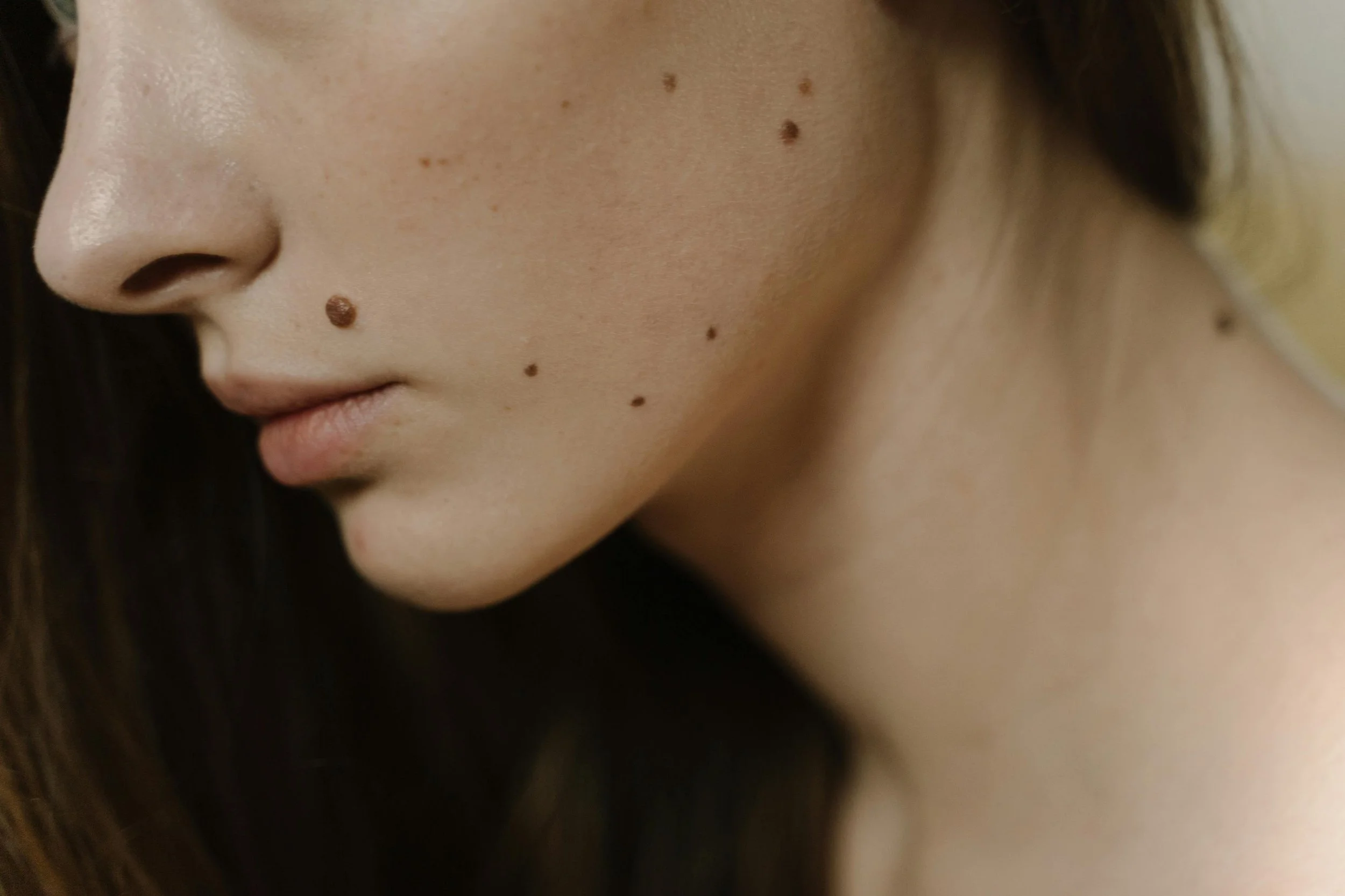
Australia is globally reputed for our high incidence of skin cancer.
Unfortunately, the downside of our beautiful coastlines and outdoor lifestyles is UV exposure, sunburn and eventually skin cancer.
If you haven’t already had a Basal Cell Carcinoma (BCC) or Squamous Cell Carcinoma (SCC) identified and removed, it’s likely that you know a few people who have.
It’s estimated that 69% of Australians will have at least one keratinocyte cancer (BCC or SCC) excised in their lifetime*. This lifetime risk is only going to increase with age, which is why regular skin checks and sun protective measures (think slip, slop, slap skin cancer prevention campaign) are so important!
So, how do you self-monitor for skin cancer and what are you looking for?
Below is a quick guide for identifying the most typical skin cancer types.
* Adele CG, Alison JV, Bruna SR, Catherine MO, David CW, Nirmala P. Keratinocyte cancer incidence in Australia: a review of population-based incidence trends and estimates of lifetime risk, Public Health Research & Practice [Internet]. 2022; 32(1). Available from: https://doi.org/10.17061/phrp3212203.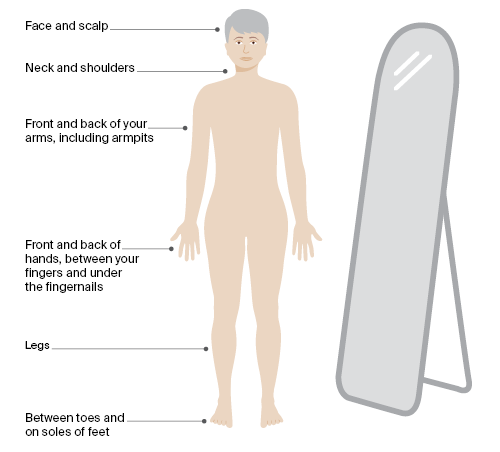
How to check your skin
Make sure you check your entire body, as skin cancers can sometimes occur on parts of the body that are not exposed to the sun, such as the soles of the feet, between fingers and toes and under nails.
Undress completely and make sure you have good light.
Use a mirror to check hard to see spots, like your back and scalp, or get a family member, partner or friend to check for you.
What to look for
There are three main types of skin cancer:
01
Melanoma
(including nodular melanoma)
02
Basal cell
carcinoma
03
Squamous cell
carcinoma
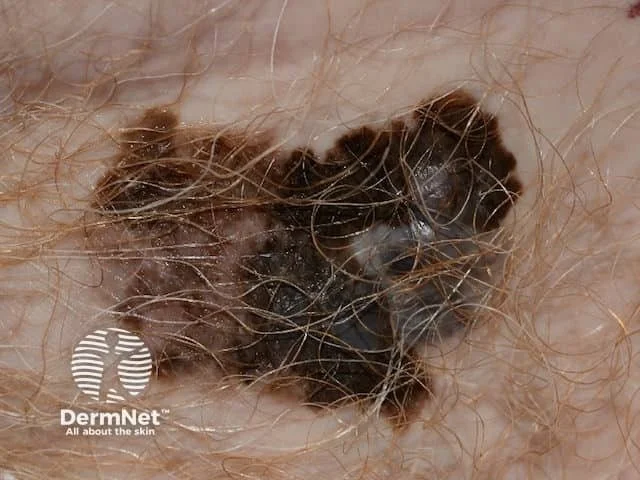
Melanoma
An extremely serious form of skin cancer.
If left untreated, it can spread to other parts of the body.
Appears as a new spot or an existing spot that changes in colour, size or shape.
Can appear on skin not normally exposed to the sun.
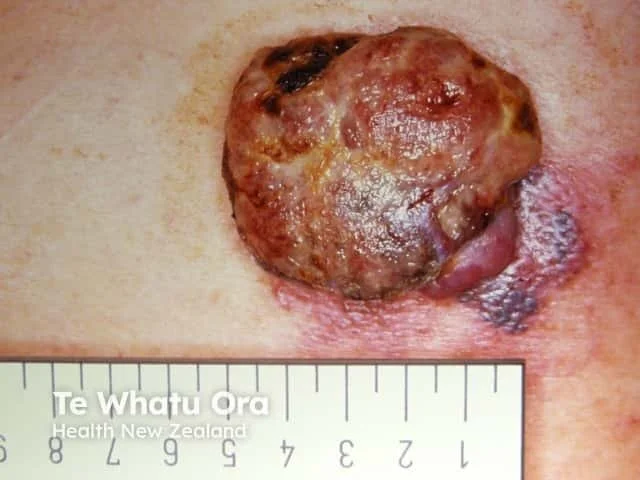
Nodular melanoma
Grows quickly.
Looks different from common melanomas (raised and even in colour).
Many are red or pink; some are brown or black.
They are firm to touch and dome-shaped.
After a while, they begin to bleed and crust.
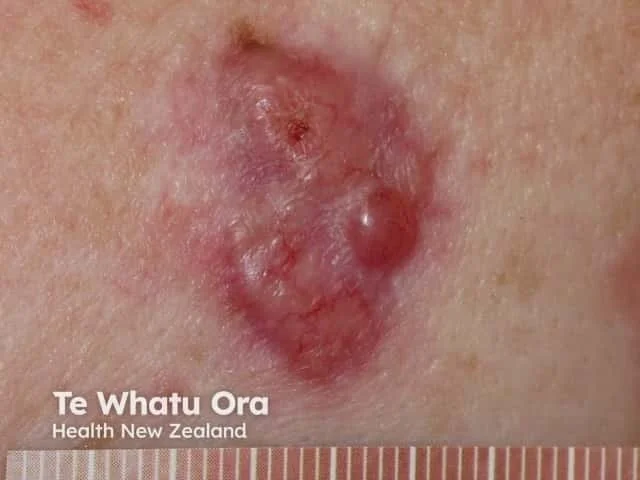
Basal cell carcinoma
Very common form of skin cancer.
Red, pale or pearly in colour, appears as a lump or dry, scaly area.
May ulcerate or fail to completely heal.
Grows slowly, usually on areas that are often exposed to the sun.
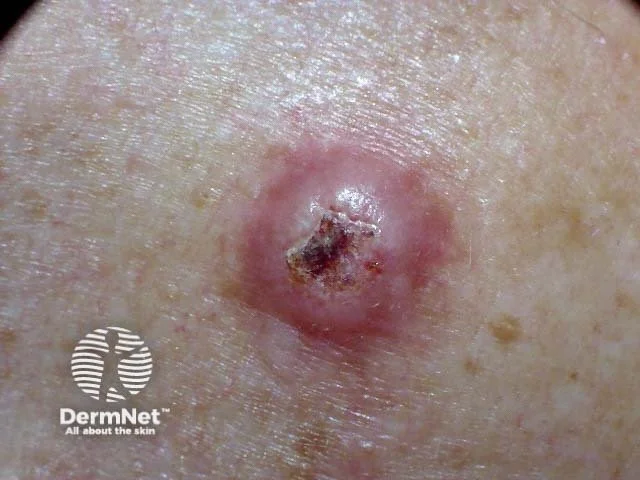
Squamous cell carcinoma
A thickened, red scaly spot that may bleed easily, crust or ulcerate.
Grows over some months, usually on areas often exposed to the sun.
More likely to occur in people over 50 years of age.
ABCDE melanoma detection guide
The ABCDE of melanoma detection can be a useful guide when checking your skin.
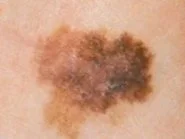
A is for Asymmetry
Look for spots that lack symmetry. That is, if a line was drawn through the middle, the two sides would not match up.
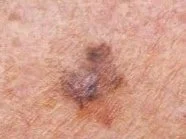
B is for Border
A spot with a spreading or irregular edge (notched).
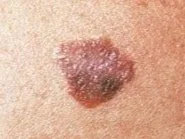
C is for Colour
Blotchy spots with a number of colours such as black, blue, red, white and/or grey.
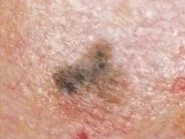
D is for Diameter
Look for spots that are getting bigger.
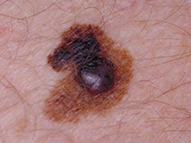
E is for Evolving
Spots that are changing and growing.
Images sourced from Cancer Council website, https://www.cancer.org.au/cancer-information/causes-and-prevention/sun-safety/check-for-signs-of-skin-cancerFor more information on skin cancer self-monitoring, please head to the Cancer Council sun safety website: