

Joint health
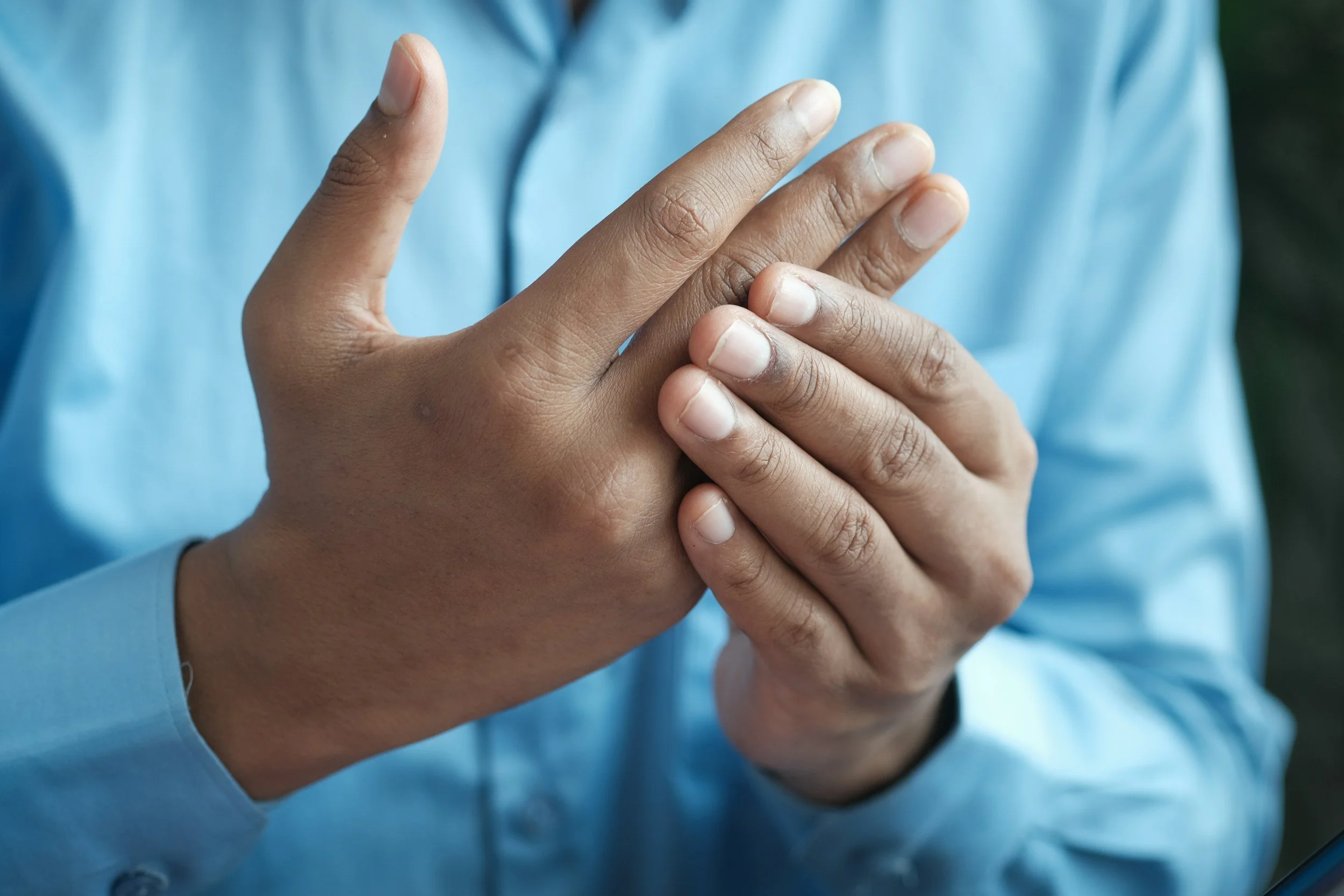
Osteoarthritis (OA) is a common, chronic joint condition where protective cartilage breaks down, affecting the whole joint.
This can cause pain, stiffness, swelling, and reduced range of movement. It occurs most often in hands, shoulders, hips, knees, and the spine and can be caused by joint stress, injury, genetics, and excess weight, leading to difficulty with daily tasks as it progresses.
Osteoarthritis impacts all tissues of the joint, including cartilage, ligaments, muscles and bone. The condition is not simply the result of wear and tear; it is driven by the progressive degeneration of joint tissue and impaired repair mechanisms.
As the joint undergoes degenerative changes, inflammation and structural tissue changes occur, resulting in pain, fluid build-up, and stiffness.*
* Hunter, D., Bird, P., deKroo, T., Marabani, M., McQuade, J., Nash, P., Nyuyen, J., Youssef, P. Taking Control of Your Osteoarthritis. A practical guide to treatments, services and lifestyle choices (2016). Arthritis Australia. https://arthritisaustralia.com.au/wordpress/wp-content/uploads/2021/05/Ostetoarthritis-WEB-2016-May21-Update.pdfWhat is the difference between osteoarthritis and rheumatoid arthritis?
Osteoarthritis is the most common type of arthritis in the Australian population.
It is a degenerative condition, and although you may have a family history of osteoarthritis it can also be a condition that is lifestyle related (e.g. lots of high impact sports or increased joint stress due to being overweight).
Symptoms:
Pain and stiffness in the joints may increase over weeks/months/years.
Activities of daily life (walking/running/gardening/opening jars) become increasingly painful and difficult with the progression of osteoarthritic changes.
Rheumatoid arthritis is an inflammatory type of arthritis. It is an immune mediated condition, meaning that your immune system is hyperactive and attacking the tissue of the joints.
Rheumatoid arthritis often affects the smaller joints in the fingers, hands, toes, and feet. In some patient’s larger joints like the hips, knees and spine may also be impacted.
Symptoms:
Stiffness in the morning.
Affected areas are painful to touch, swollen and painful in the joint.
Reduced mobility in the joint(s).
Bilateral distribution: the right and left sides are both affected.
How is osteoarthritis diagnosed?
Your doctor will diagnose osteoarthritis from your symptoms and a physical examination. An X-ray may show the narrowing and changes in the shape of your joint.
However, X-rays do not diagnose how much your joint degeneration is impacting your daily life. An X-ray that shows joint damage does not always mean you will have a lot of pain or problems, additionally your joint may be very painful despite x-rays being normal.
Blood tests are only helpful to rule out other types of arthritis.
For more information on osteoarthritis:
How is osteoarthritis treated?
Usual options for treatment of OA include:
Regular oral anti-inflammatory drugs such as ibruprofen or naproxen.
Corticosteroid injection into the joint (reduces inflammation).
Physiotherapy to strengthen the muscles surrounding the joint to better support the joint and thus relieve pain and swelling.
It is recommended to continue to exercise despite having OA in order to prevent muscle weakness, but this can be difficult.
PRF treatment
One of the more novel approaches to treatment of OA involves introducing components of your own blood into the joint. Blood cells contain many growth factors which control tissue healing and thus promote tissue regeneration.
Platelet-rich fibrin (PRF) is a blood fraction derived by centrifuging your blood at specific speeds to separate the cells most important for healing and regeneration. This can then be injected into the joint to encourage the tissues to begin healing. Intra-articular PRF injections are given to treat inflammatory or degenerative joint conditions, such as OA of the knees, tendinitis or shoulder capsulitis (frozen shoulder).
As previously stated, PRF is known to contain growth factors which help tissue regeneration within the joint. In addition, the transient increase in volume in the joint stretches the capsule and stimulates the body to remodel this. Using the growth factors in PRF, the body regenerates the lining of the joint, as well as the tendons and ligaments within the joint capsule. PRF may also stimulate the growth of new cartilage on the ends of the bones where cartilage has been lost, for example in osteoarthritis of the knee.
Other conditions in which PRF can be beneficial include hair thinning or hair loss e.g. alopecia, where the PRF is injected into the skin of the scalp to act directly on the hair follicles. PRF is also used for rejuvenation and prevention of aging-related changes in the skin of areas such as the face and neck.
What to expect from PRF
PRF injection results can vary widely between individuals and treated conditions. You will not experience immediate relief of pain and swelling of a joint with this procedure, but benefit should be seen within 6 weeks. With repeat treatments you should see longer term benefits related to strengthening and regeneration of the structures of the joint.
For joint pain, some studies show relief for 6–12 months in osteoarthritis after a course of initial injections.
Typical duration by condition
Knee osteoarthritis: Relief often lasts 6–12 months, while longer benefits can be expected with maintenance treatments.
Sports injuries/tendonitis: Can provide relief for 6–12 months or longer, by supporting tissue healing.
Cosmetic (hair/skin): Effects can persist for 1–2 years, with follow-ups recommended every 4–6 months.
Factors influencing longevity
Individual health: Age, metabolism, and overall wellness play a big role.
Condition severity: Milder injuries often respond better and for longer than severe ones. Severe conditions are likely to respond better to more frequent treatments.
Treatment protocol: A single injection will be less effective vs. a series (e.g. 3 shots spaced weeks apart) in terms of results achieved.
PRF preparation: How the platelets are concentrated (time taken, spin speed, quality of equipment, skill of practitioner) impacts cell numbers, growth factor release and treatment outcomes.